AR Index | Next: (y-01) Introduction and History
Mental Model First
The course is organized around one practical idea: VR/AR is not only a rendering topic. A working immersive system sits at the intersection of graphics, tracking, computer vision, human-computer interaction, perception, and evaluation. The lectures build the technical vocabulary; the project forces those ideas into an actual interactive artifact.
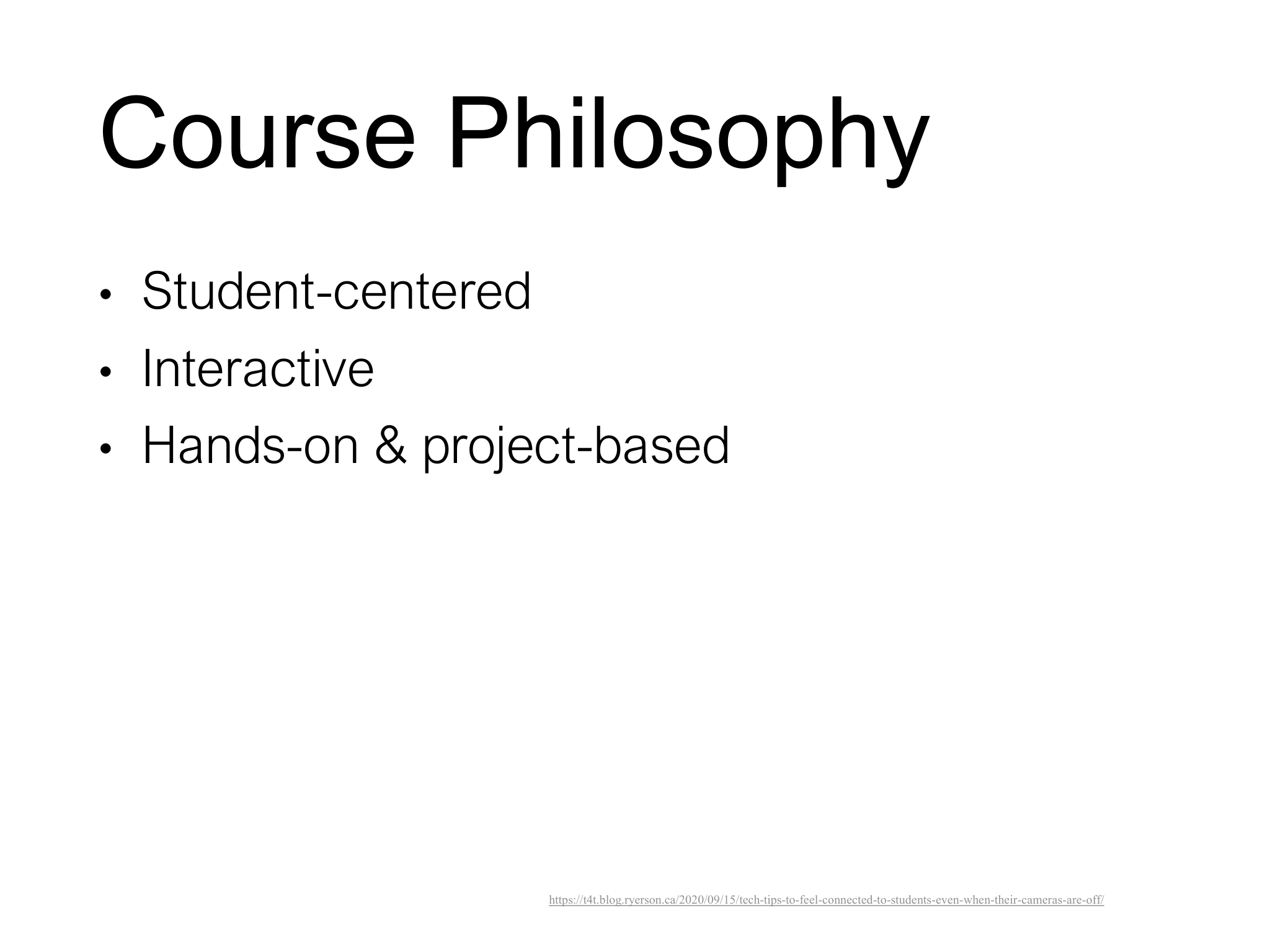
The course philosophy is student-centered, interactive, hands-on, and project-based.
1. What Counts as VR/AR Work?
VR and AR are introduced as visual computing fields with strong ties to computer graphics, computer vision, HCI, perception, and visualization. The course goal is to understand both the conceptual foundations and the engineering constraints that make immersive systems hard.
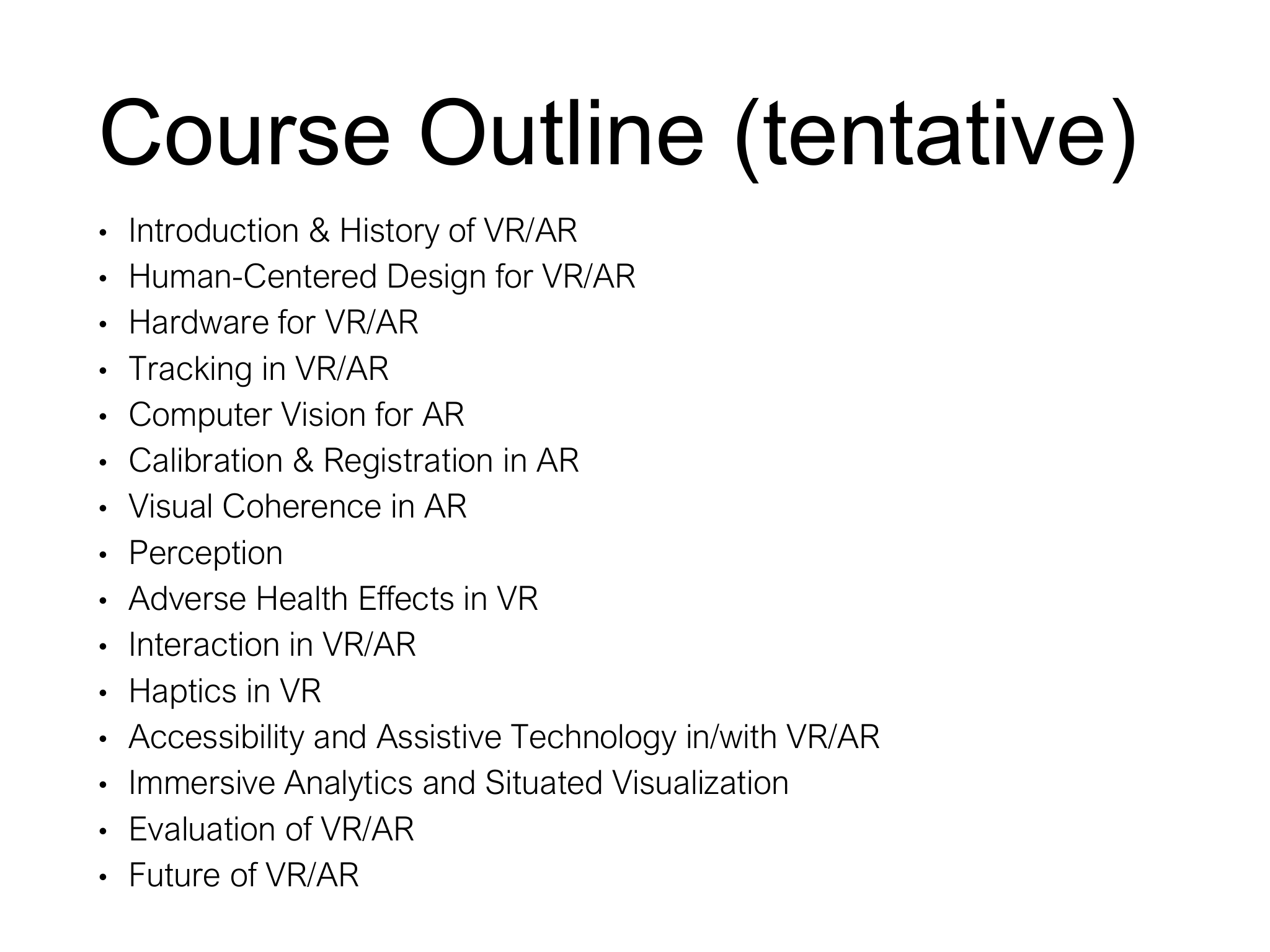
The tentative outline starts with definitions and history, then moves through HCD, hardware, tracking, computer vision, calibration, coherence, perception, interaction, haptics, accessibility, immersive analytics, and evaluation.
Key dependencies:
- Computer graphics creates the images and stereo views.
- Computer vision finds and tracks physical structure for AR.
- HCI shapes the interaction techniques and evaluation methods.
- Human perception constrains latency, field of view, motion, comfort, and presence.
2. Course Structure
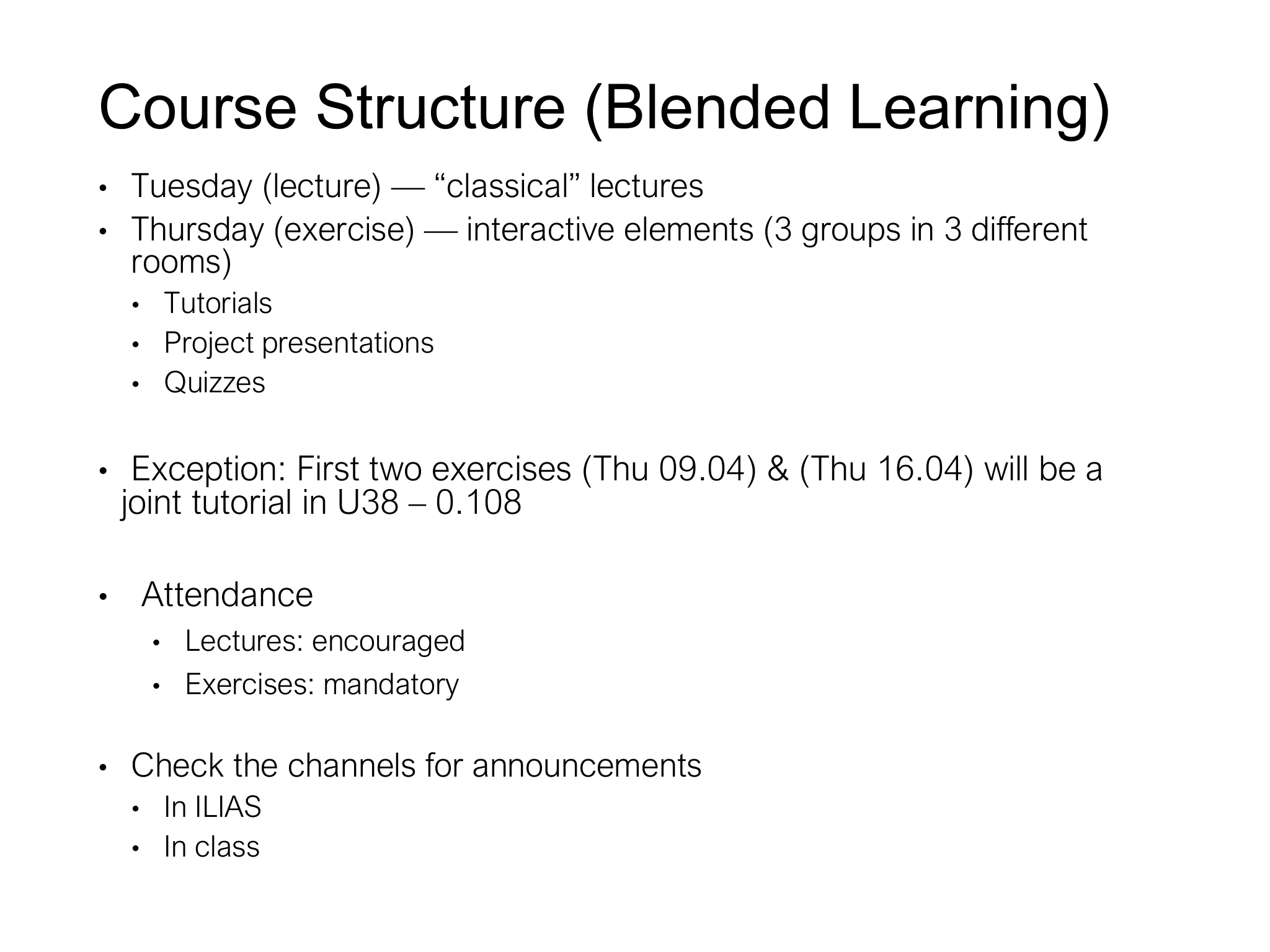
The course uses a blended structure: classical theory lectures on Tuesdays and interactive exercise groups on Thursdays.
The rhythm is split into lectures and exercises. Lectures cover the theory. Exercise sessions support the project, quizzes, Unity work, hardware access, and interactive feedback.
For exam preparation, treat the lectures as the conceptual backbone and the exercises as evidence of how those concepts become implementation decisions.
3. Assessment Logic
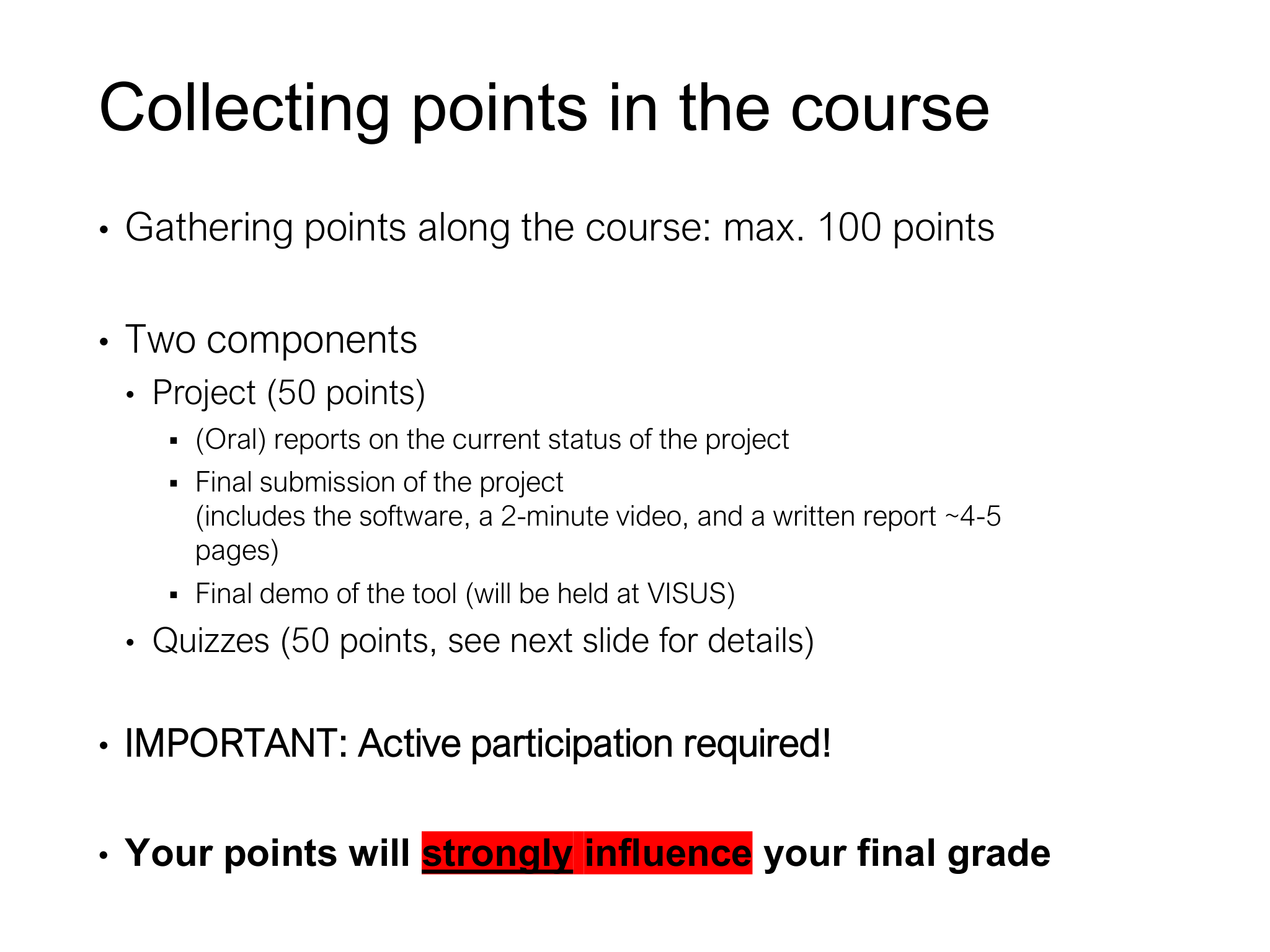
The course uses a 100-point system split between the project and quizzes.
The course score is accumulated during the semester:
| Component | Points | What It Measures |
|---|---|---|
| Project | 50 | Ability to design, build, present, and explain an immersive system. |
| Quizzes | 50 | Recall and understanding of lecture concepts. |
| Oral exam | Final grading gate | Ability to explain the theoretical part and connect it to the project. |
4. Team Project
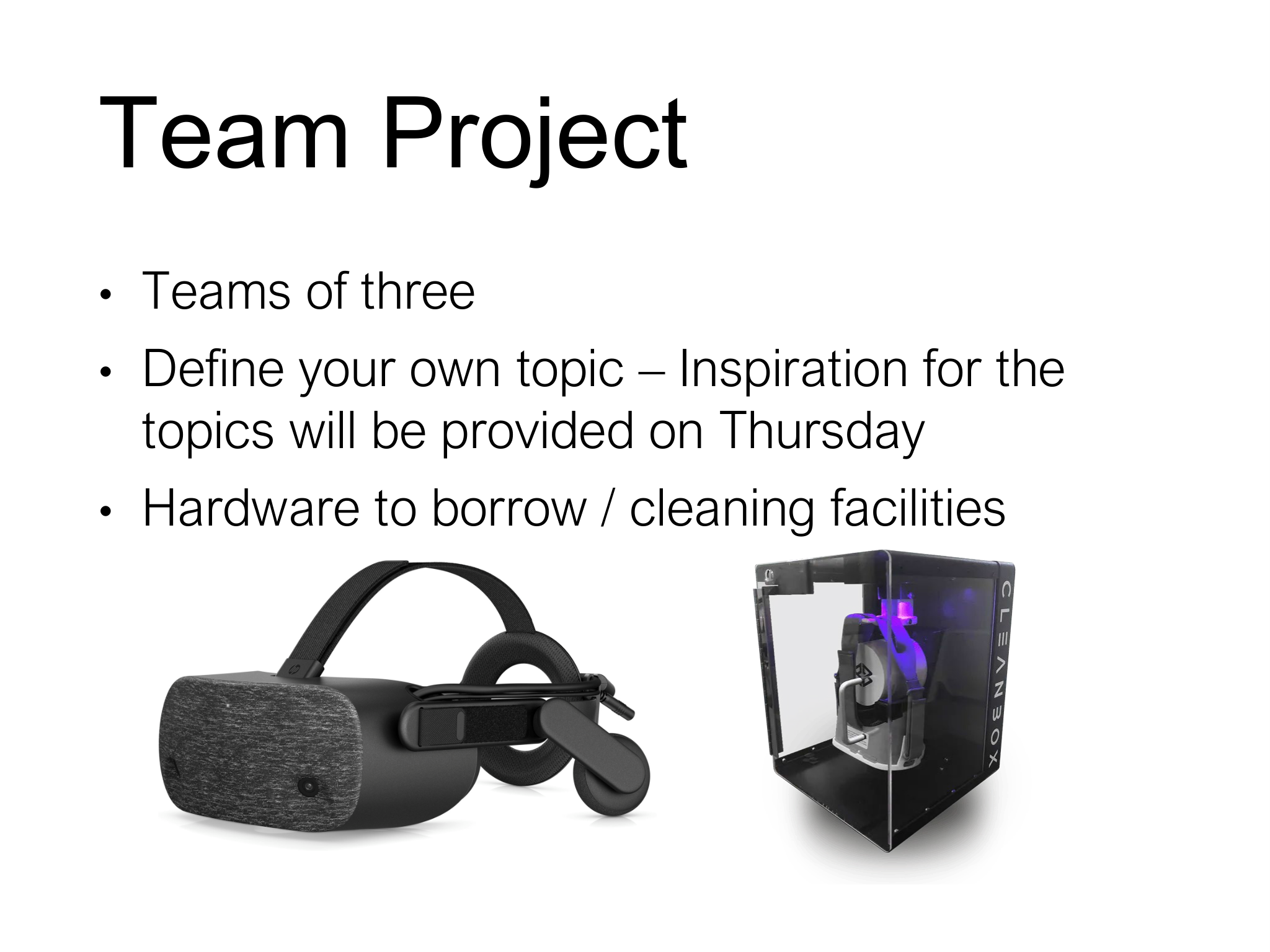
The project is done in teams of three, with a topic chosen by the team or inspired by course suggestions.
The project is not just a programming assignment. It is meant to demonstrate a full VR/AR idea: concept, interaction, implementation, demo, and report. Strong projects make explicit design decisions about hardware, tracking, interaction, comfort, and evaluation.
Deliverables normally include:
- a working interactive artifact,
- status updates during the semester,
- a final demo or presentation,
- source code and project material,
- a short academic-style report.
5. Oral Exam and Eligibility
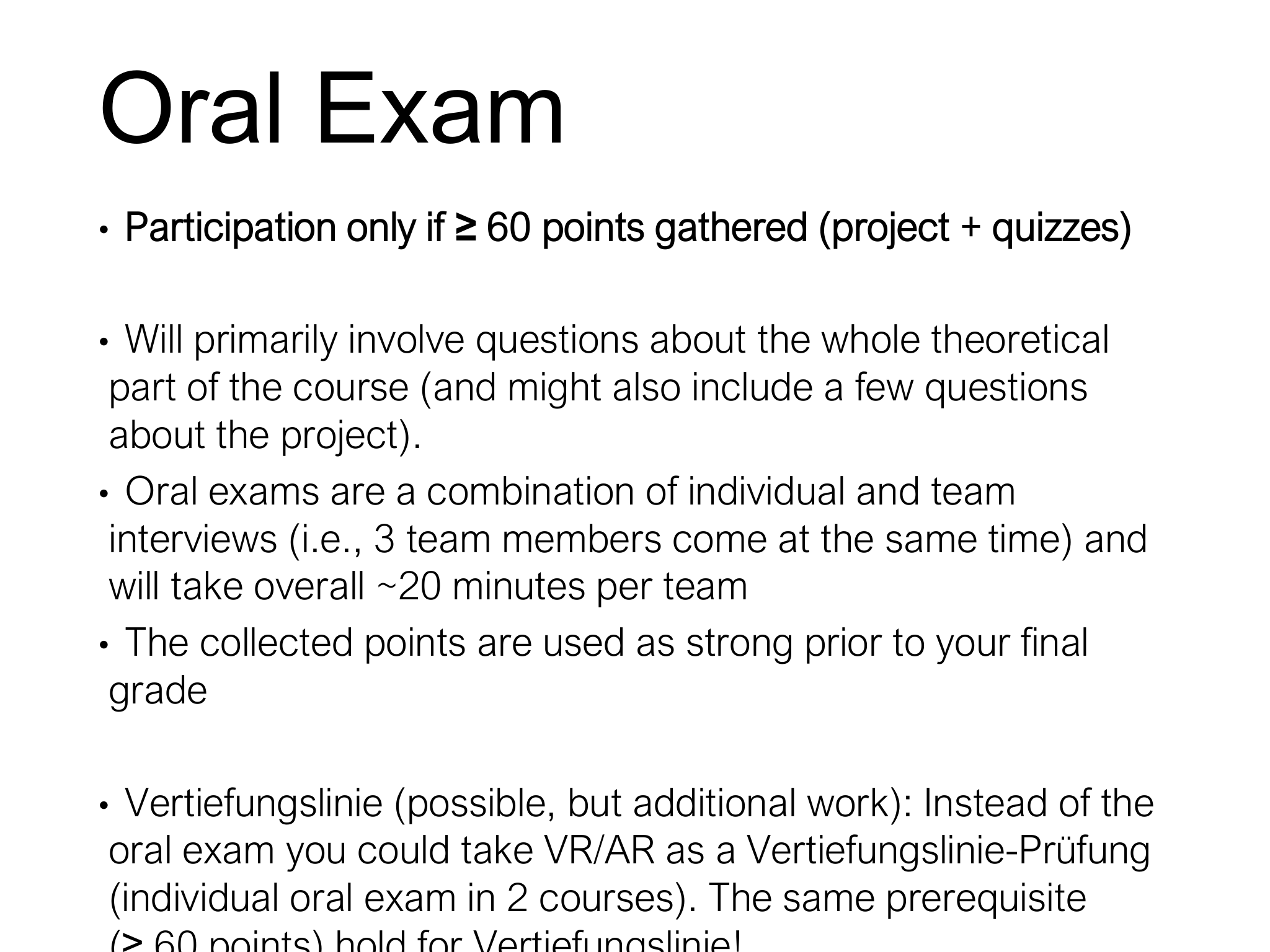
Participation in the oral exam requires at least 60 collected points from the project and quizzes.
The oral exam focuses primarily on theory from the lecture sequence, with possible questions about the project. That means project details should be explainable using course concepts: presence, registration, tracking, latency, interaction technique, and evaluation choices.
Exam Focus
- Know the difference between the course’s two assessment tracks: quizzes and project.
- Understand why VR/AR is interdisciplinary rather than only graphics programming.
- Be ready to explain how a project choice maps to hardware, tracking, interaction, and perception constraints.
Self-Check
- Why does the course combine lectures with project-based exercises?
Answer
Lectures provide the theoretical backbone (definitions, perception, tracking, calibration, interaction). The project forces those concepts into an actual interactive artifact, so students learn the engineering constraints that lectures alone do not surface. The two together turn passive understanding into design ability.
- Which fields feed into VR/AR besides computer graphics?
Answer
Computer vision (tracking and registration of physical structure), HCI (interaction techniques and evaluation), human perception (latency, field of view, motion, comfort, presence), and visualization. VR/AR is interdisciplinary by construction, not just a rendering topic.
- What is the minimum point threshold for oral exam eligibility?
Answer
At least 60 points collected during the semester, from the 50-point project and 50-point quiz tracks combined. Falling below 60 points means no oral exam, and therefore no final grade.
- Why is a VR/AR project report expected to discuss design decisions, not only implementation?
Answer
The oral exam asks students to explain how project choices map to course concepts such as presence, registration, tracking, latency, interaction techniques, and evaluation. A report that records these decisions makes those connections visible and demonstrates that the project is grounded in theory, not just code.